Balance is a coordinated performance skill–strength is one of the systems that helps support it.
Balance is more active than it looks
Your body makes constant corrections as you stand still. Your eyes provide information about the environment. Your inner ear helps sense head position and acceleration. Sensory receptors in your feet, joints, and muscles help tell your brain where your body is in space. Then the nervous system has to organize a muscular response quickly enough to keep your center of mass where it belongs.
That means balance is about more than simple “stability;” it depends on the ability to sense, react, and produce force. When one of those pieces becomes less reliable, the whole system has less margin for error.
Strength gives the body options
When you step onto an uneven surface, you know that your ankle moving is only part of the solution. The muscles around the ankle, knee, and hip still have to produce enough force—and produce it quickly enough—to correct the position.
This is one reason lower-body strength and power matter for movement confidence. In a randomized controlled trial of older adults, six weeks of flywheel resistance training improved mobility and measures of postural balance while also increasing muscle power. The study was small, so it should not be treated as a universal prescription, but it illustrates the connection between the ability to produce force and the ability to manage the body in space.
Balance problems can hide inside everyday movement
You shouldn’t have to fall to notice that balance has changed.
Early signs are often subtler: reaching for the railing sooner, avoiding uneven trails, hesitating on stairs, feeling less secure getting out of a low car, or widening your stance when you are tired.
Those changes are useful information. While they do not automatically mean something is wrong, they can reveal that a movement demands more of your current capacity than it used to. Training can then focus on trainable components: lower-body strength, single-leg control, deceleration, coordination, and confidence through useful ranges of motion.
Why “stand on one leg” is not the whole answer
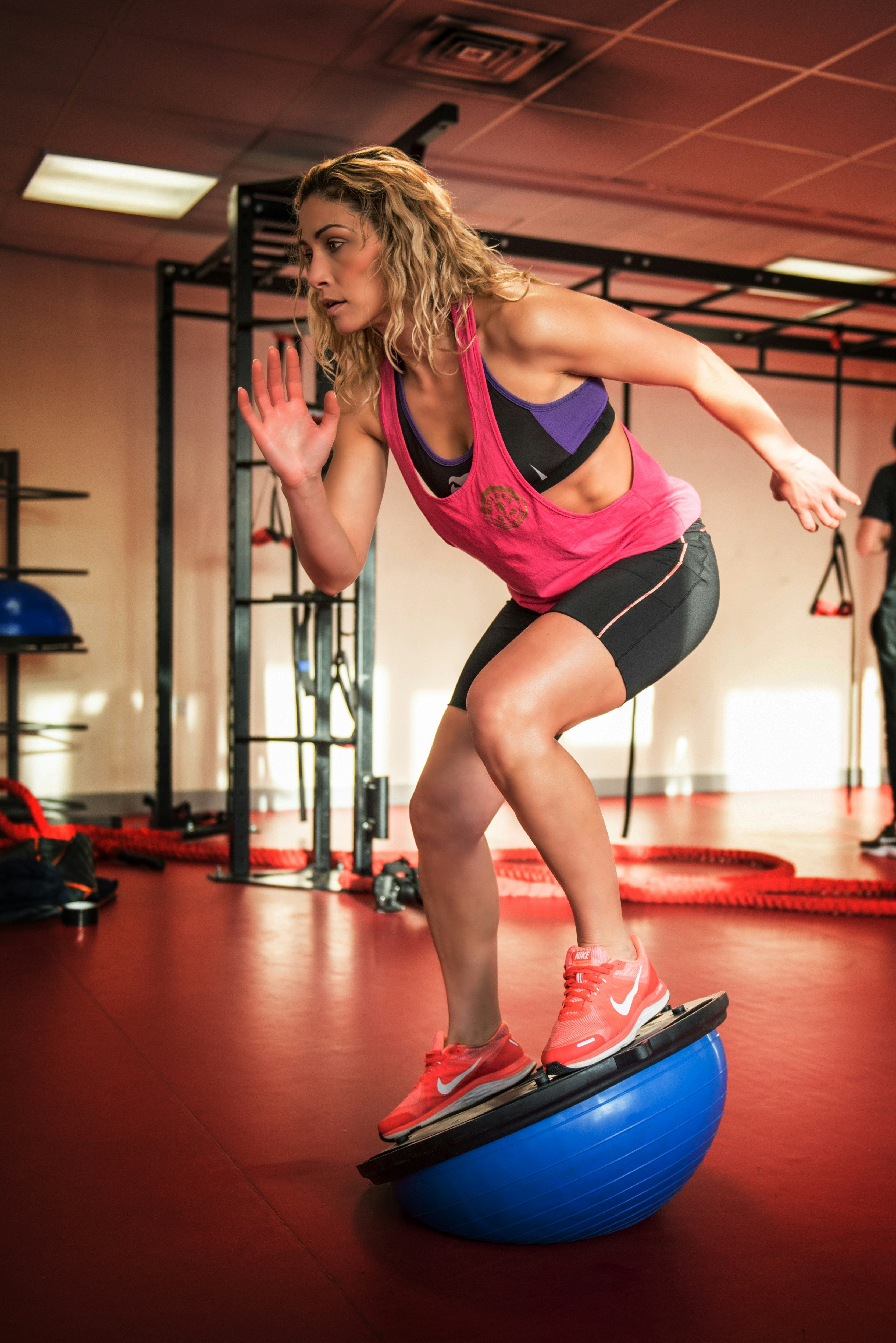
Single-leg balance drills can be useful, but balance in real life is dynamic. You are walking, stepping down, turning, carrying, reacting, and changing direction. A complete approach therefore needs more than static practice.
Strength training adds the ability to create and absorb force. Controlled eccentric work can be especially relevant because many balance corrections involve slowing the body down or controlling a descent. A step-down, for example, requires the working leg to manage your body weight as it lowers. That is strength and balance happening at the same time.
Train the system, not just the symptom
At AiPerformance, training is individualized to the person in front of us. For someone who feels less steady, the answer may involve building more leg strength. For someone else, the limiting factor may be a previous injury, reduced ankle control, or hesitation in a specific range. The right exercise is the one that addresses the actual limitation and can be progressed safely over time.
Good coaching matters! A trainer can adjust stance, tempo, range, resistance, and complexity in real time. The goal is to make the challenge specific enough to create adaptation without turning every session into a test.
Steady is something you can train
Aging changes the body, but losing confidence in movement should not be treated as an automatic endpoint. Strength, power, coordination, and balance are physical qualities that can be trained at many ages and ability levels.
The practical goal is not to become great at a balance drill. It is to walk, step, hike, carry, turn, and react with more confidence. That is balance where it counts: in the life you actually live.
AiPerformance offers personalized strength, mobility, and performance training in Windsor, Colorado, for adults, athletes, post-rehab clients, and anyone focused on moving better for the long term.
Contact us to schedule your first session.
Reference Notes
• Sañudo B et al. Effect of Flywheel Resistance Training on Balance Performance in Older Adults: A Randomized Controlled Trial. J Sports Sci Med. 2019. — https://pubmed.ncbi.nlm.nih.gov/31191105/