The strongest body is not the one that wins the gym. It is the one that makes everyday life feel easier, safer, and more capable.
Strength is only useful if you can use it
A bigger number on a machine can be satisfying, but most people do not walk into AiPerformance because they want to become better at a machine. They want to carry luggage without thinking about their back. They want to get up from the floor easily. They want to hike, golf, ski, work in the yard, play with their kids or grandkids, and keep doing the things that make life feel like theirs.
That is the difference between strength as a statistic and strength as capacity. The goal is not simply to produce more force in a controlled gym setting. The goal is to build enough strength, control, and reserve that the demands of daily life feel comfortably below your maximum.
Daily life asks for more than one kind of strength
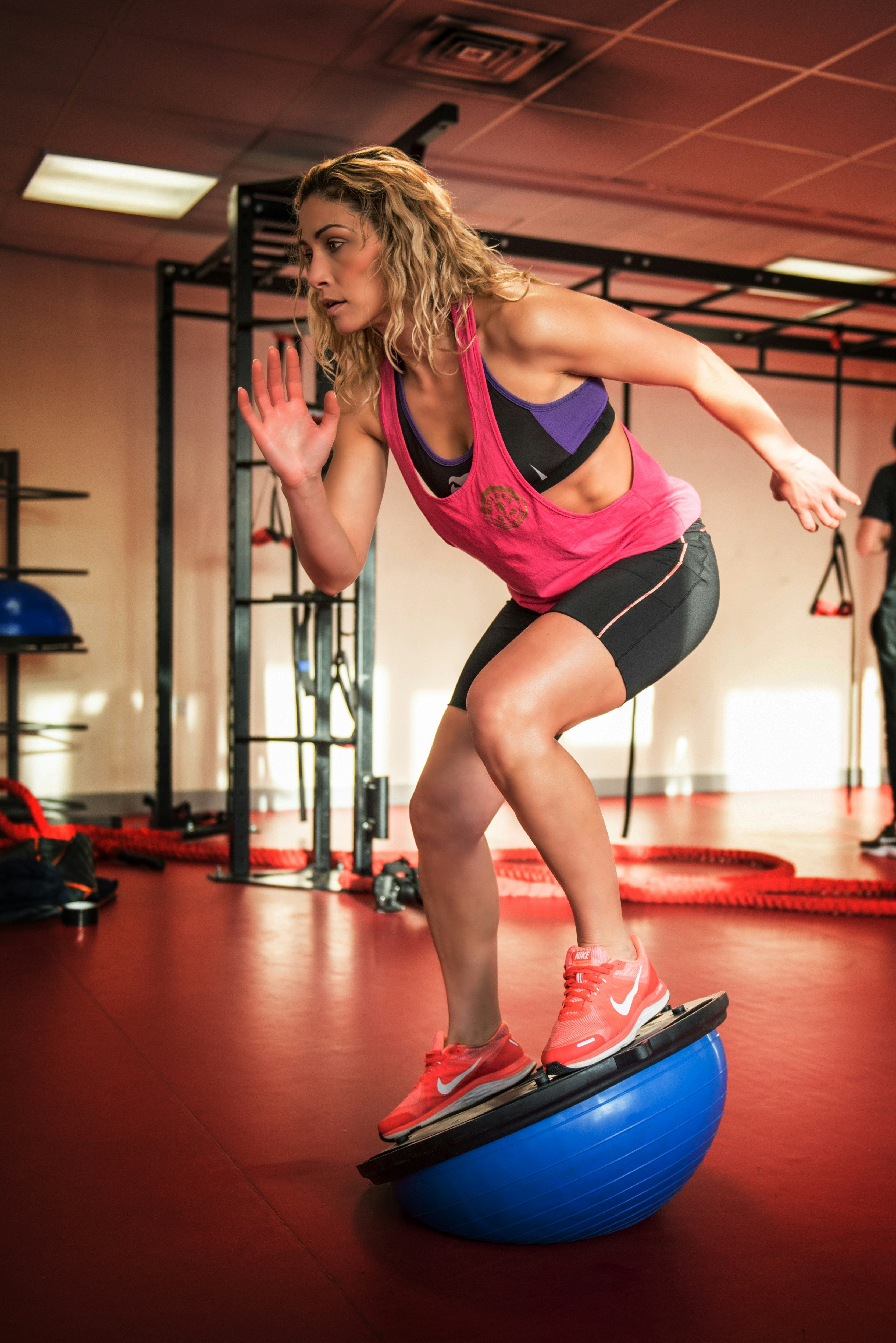
Real-world movement is rarely a perfect two-footed lift performed on command. You carry with one arm. You step off curbs. You twist to load the car. You catch yourself when the ground changes. You lift something from an awkward position and then have to walk with it.
Those tasks combine muscular strength with balance, coordination, range of motion, and the ability to control force. Research in older adults has shown that structured resistance training can improve measures such as upper- and lower-body strength and some measures of functional ability. The larger point is simple: training can support the physical qualities that help people remain capable in everyday tasks.
Build a reserve, not just a result
Think of physical capacity like a margin of safety. If standing up from a low chair requires nearly all the strength you have, the task feels hard and leaves little room for fatigue, distraction, or an awkward position. If training raises your capacity, that same chair represents a much smaller percentage of what you can do.
That reserve matters at every age. For an athlete, it can mean having enough strength and control to maintain mechanics late in a game. For a busy adult, it may mean making it through a physically demanding day without feeling depleted. For someone focused on longevity, it can mean preserving independence and confidence in common movements.
Why personalized training matters
Two people can have the same goal and need completely different training. One may need more hip strength. Another may have an old ankle injury that changes how they squat. A third may be strong but avoid a certain range because they do not trust it yet.
AiPerformance uses one-on-one training built around the individual: movement patterns, previous injuries, strengths, limitations, and long-term goals. That makes it possible to train the qualities that actually limit performance instead of handing everyone the same generic workout.
Control is part of strength
The lowering phase of a movement—the eccentric phase—is especially useful for teaching control under load. Lowering into a squat, stepping down from a stair, or decelerating the body all require muscles to produce force while lengthening. AiPerformance’s eccentric-focused approach emphasizes controlled movement so strength is not only produced, but managed.
That distinction shows up outside the gym. Life does not only ask you to lift things. It asks you to lower, catch, absorb, stabilize, and reposition. Training should prepare you for all of it.
Train for the life you want to keep doing
A useful training question is not, “How much can I lift?” It is, “What do I want my body to keep saying yes to?” Maybe the answer is travel, mountain days, recreational sports, gardening, carrying a child, or simply moving through the day without hesitation.
That is the standard that matters. Strength should create options. It should make normal tasks feel easier and demanding tasks feel more possible. The best training does not stay in the gym—it follows you into the rest of your life.
AiPerformance provides personalized, science-driven strength and performance training in Windsor, Colorado, with an emphasis on efficient sessions, movement quality, eccentric-focused strength, and long-term capability.
Reference notes
• Fahlman MM et al. Effects of resistance training on functional ability in elderly individuals. Am J Health Promot. 2011. — https://pubmed.ncbi.nlm.nih.gov/21361808/