More range of motion is not automatically better. The useful kind of mobility is the range you can control, load, and trust.
Flexibility and mobility are related, but they are not identical
Flexibility usually describes how far a muscle or joint can move. Mobility is a broader idea: can you actively access that range and control what happens there? That distinction matters because everyday life and sport do not ask you to simply reach a position. They ask you to produce force from it, absorb force into it, and move through it with confidence.
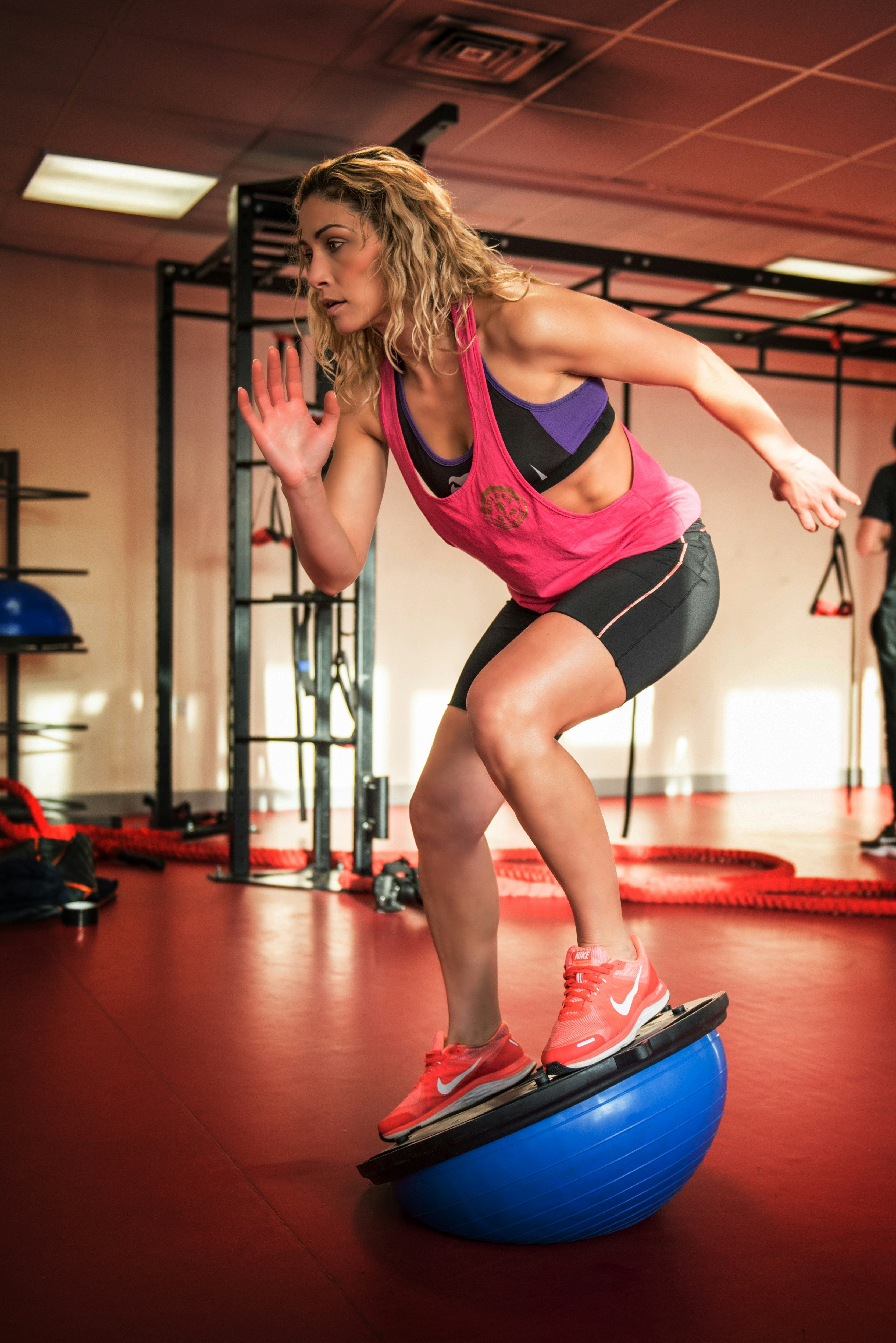
Being able to pull your knee toward your chest while lying down is different from controlling a deep split squat. Reaching your arm overhead while someone moves it for you is different from pressing weight overhead while keeping the rest of your body organized. Usable mobility includes strength.
Range without control can feel uncertain
Many people have positions they can technically reach but do not trust. They may drop quickly through the bottom of a squat, avoid loading the last few degrees of shoulder motion, or use momentum to get through a range that feels weak.
That is why “more stretching” is not always the only answer. Sometimes the missing piece is the ability to create tension and control at the edge of the range you already have.
Resistance training can build flexibility too
Strength training and flexibility training are often treated as opposites, but research does not support such a simple divide. In a study of untrained adults, full-range resistance training improved several measures of flexibility similarly to static stretching while also improving strength. More recent randomized research has continued to investigate full-range resistance training as a way to improve both strength and range of motion.
That does not mean stretching has no value. It means resistance training performed through an appropriate range can be part of a mobility strategy rather than something that automatically makes you “tight.”
Why the lowering phase matters
Eccentric muscle action occurs when a muscle produces force while lengthening—the controlled lowering phase of a movement. Think about lowering into a lunge, bringing a weight down from an overhead press, or controlling your body as you step down from a box.
Training this phase can help people become stronger and more confident in lengthened positions. At AiPerformance, eccentric-focused training uses controlled movement and purposeful resistance to improve strength, movement quality, and joint-friendly control. The aim is not to force a range. It is to progressively own it.
Full range is individual, not universal
“Train through a full range of motion” does not mean everyone should use the same depth, joint angle, or exercise variation. Your appropriate range depends on anatomy, training history, pain, previous injury, experience, and the movement itself.
For one person, a supported split squat may be the best way to strengthen a deeper hip and knee position. For another, the first step may be a smaller range with excellent control. The range can expand as strength and confidence improve. This is where individualized coaching is more useful than a generic command to go deeper.
Three questions define usable mobility
When you think about mobility, ask three questions. Can I reach the position? Can I control the position? Can I produce or absorb force there?
If the answer to the first question is yes but the other two are no, you may not need more passive range. You may need more strength inside the range you already have.
That is the type of mobility that carries into real life: getting low enough to pick something up and standing back up smoothly, reaching overhead without compensation, stepping down under control, rotating with stability, or changing direction without hesitation.
Reach the range and own it.
Mobility is most valuable when it expands what you can confidently do. Strength training can help turn available range into usable capacity by adding control, resistance, and progressive challenge.
At AiPerformance, personalized sessions blend strength, mobility, and performance work around each person’s movement patterns and goals. The objective is not to collect impressive positions. It is to build a body that can use its movement where it matters.
Reference notes
• Morton SK et al. Resistance training vs. static stretching: effects on flexibility and strength. J Strength Cond Res. 2011. — https://pubmed.ncbi.nlm.nih.gov/21969080/
• Rosenfeldt M et al. Comparison of resistance training vs static stretching on flexibility and strength. 2024. — https://pmc.ncbi.nlm.nih.gov/articles/PMC11212372/