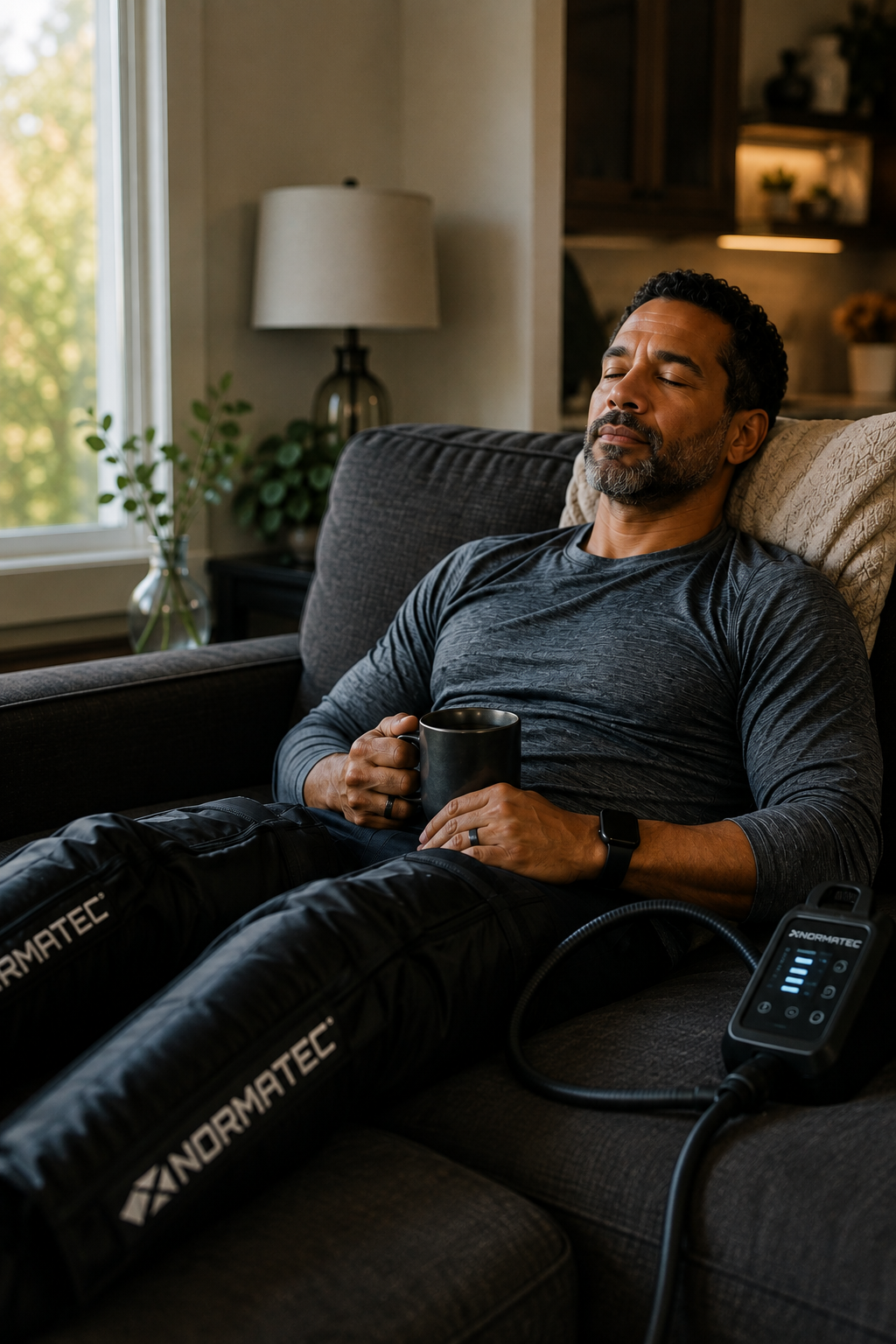
“Training isn't a competition for who can do the most. It's a negotiation with a nervous system that has its own recovery timeline.”
Pharmacology has a concept called the dose-response curve: too little of a compound and nothing happens, the right amount and you get the intended effect, too much and the effect flattens out or reverses entirely. Training follows the same curve, even though almost no one trains like it does. Muscle needs roughly 48 to 72 hours of uninterrupted repair to fully adapt to a hard session. Show up again before that window closes, and you're not adding a second dose of progress — you're interrupting the first one.
Everyone assumes that if two sessions per week is good, five must be better. The research on training volume and frequency doesn't support that assumption. Beyond a certain point on the dose-response curve, additional sessions stop producing proportional additional adaptation — they mostly add fatigue. The curve doesn't keep climbing. It flattens, and for a lot of people training at high frequency without full recovery, it eventually tips downward.
This isn't a controversial fringe idea. It's the same logic that governs medication dosing, and it applies to a stimulus as physiologically demanding as high-intensity eccentric training with even more force, because the disruption a hard session creates at the cellular level is real and needs time to resolve.
Muscle soreness fades faster than the nervous system actually recovers. High-load eccentric work in particular creates a deeper, longer-lasting fatigue in the central nervous system — the part of the body responsible for recruiting motor units quickly and forcefully. This kind of fatigue doesn't always feel like anything. You can walk into the studio feeling fine and still be training on a nervous system that hasn't finished resetting.
The practical consequence is counterintuitive: a session taken before that reset is complete often produces a weaker training effect, not a stronger one, because the body can't generate the same force output or recruit the same fibers it could when fully recovered. More frequent training, in this scenario, quietly trains you to get worse at getting stronger.
There's a second reason low-frequency training outperforms high-frequency programs, and it has nothing to do with physiology. Ambitious five-day-a-week routines have a well-documented adherence problem — they're demanding enough on time and energy that most people quietly abandon them within a few months.
A twice-weekly, 30-minute session is not a compromise. It's a program built to actually get done, week after week, year after year. And a moderately intense stimulus performed consistently for years will always outperform a maximally intense program that gets abandoned after a season. The best program isn't the one with the most theoretical potential. It's the one a person is still doing eighteen months from now.
“Training isn't a competition for who can do the most. It's a negotiation with a nervous system that has its own recovery timeline.”
Two sessions a week, thirty minutes each, is not the minimum people settle for at AiPerformance. It's the dose the research points to as the one actually worth taking.
Contact us
info@aiperformance.com • (970) 222-3002
1297 Main St #1, Windsor, CO 80550