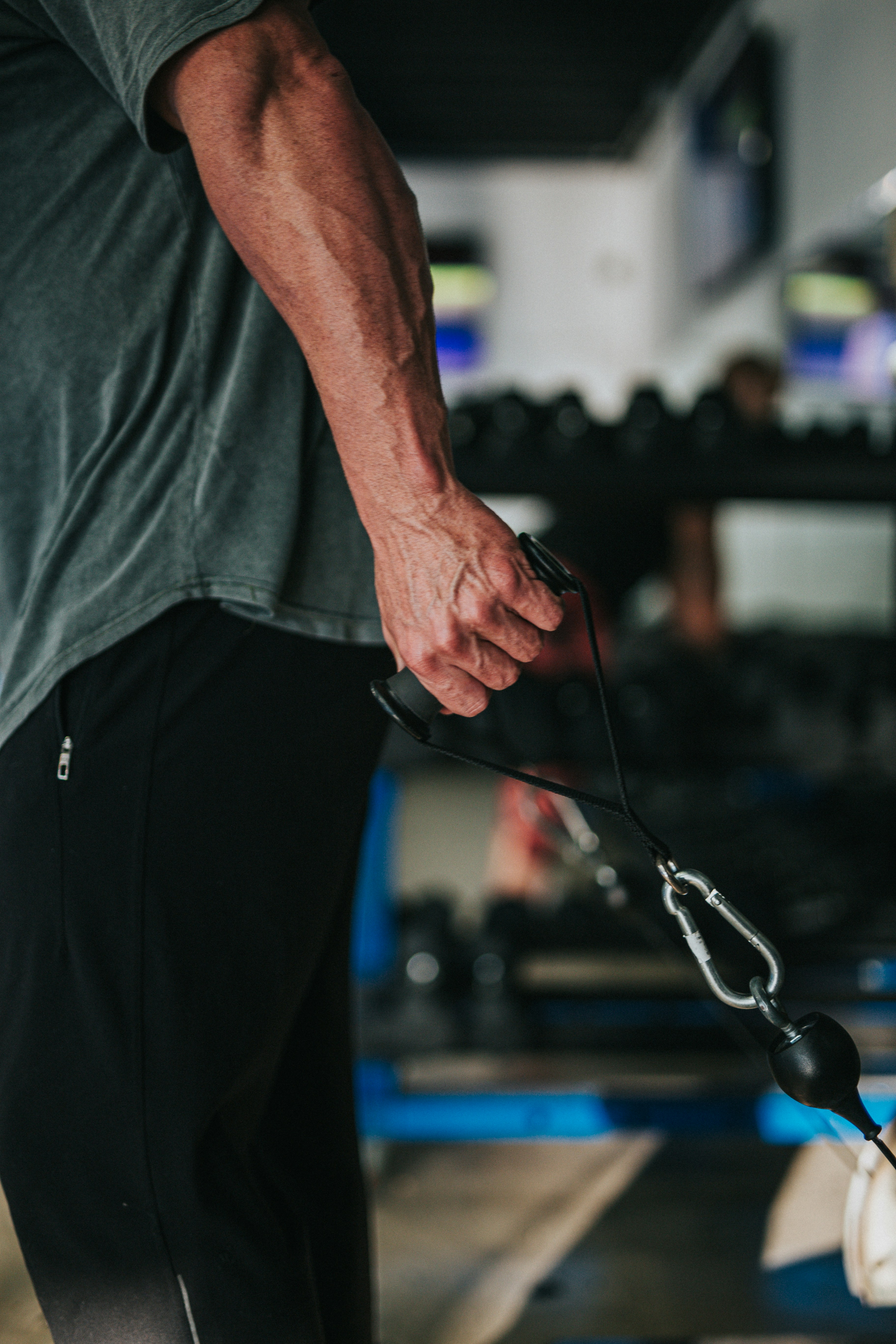
There is a deeply ingrained cultural assumption about exercise: more is better. More days per week, more hours per session, more volume, more sweat. We're here to teach you otherwise.
There is a deeply ingrained cultural assumption about exercise: more is better. More days per week, more hours per session, more volume, more sweat. This assumption is so pervasive that even people who intellectually understand the concept of recovery still feel vaguely guilty on rest days, as though doing less is a form of failure.
The science disagrees. And the biology of recovery tells a different story than the culture of effort.
The fundamental mechanism of strength training is elegantly simple: you apply a stimulus sufficient to disrupt homeostasis, your body detects the threat to its structural integrity, and it rebuilds the disrupted tissue stronger and denser to protect against future demands. That rebuilding process is called supercompensation, and it takes time.
High-intensity, high-load eccentric training — the kind you perform at AiPerformance — generates deep muscular fatigue and significant mechanical disruption at the cellular level. The repair process initiated by a single such session elevates muscle protein synthesis for approximately 48 to 72 hours. During this window, the adaptive response is active. Training the same tissue again before that window closes is not additional stimulus; it is interference.
Conventional strength training programs built around five-day splits, daily gym visits, and high weekly volume are designed for one type of athlete: the individual for whom recovery is a full-time job. Professional and elite athletes can sustain high training frequency because everything else in their life — nutrition, sleep, stress, lifestyle — is optimized around the training. They also benefit from years of adaptive tissue density that recreational trainees have not yet built.
For everyone else, high-frequency training produces diminishing returns at best, and accumulating overuse injury at worst. The connective tissue load compounds. Sleep quality degrades. Cortisol remains chronically elevated. The adaptive response is interrupted before it can complete. People often train harder and longer than necessary and achieve less because of it.
The AiPerformance model is built around a deliberately low training frequency: one to two sessions per week, each lasting 20 minutes. This is not a concession to a busy schedule. It is the protocol that the biology demands.
Within a single 20-minute session at maximal intensity, you can generate deep muscular fatigue across all major muscle groups, stimulate significant myokine release, produce the mechanical loading necessary for connective tissue adaptation, and trigger the hormonal cascade that drives recovery and growth. That is everything your biology needs from a training session.
What your biology then needs is time. Seventy-two hours of uninterrupted protein synthesis, collagen remodeling, and nervous system recovery. The second session, scheduled three to four days after the first, arrives precisely when the previous adaptation has been completed and the system is primed for the next stimulus.
The AiPerformance client who trains twice per week for six months with complete intensity will outperform the conventional gym-goer who trains five days per week with incomplete intensity. Not because effort doesn’t matter, but because misdirected effort accumulates damage rather than adaptation.
“The minimum effective dose is not a shortcut. It is the most scientifically honest way to train.”
Two sessions per week. Twenty minutes each. Precisely applied. That is the protocol that honors both your biology and your time.